Test. Analyze. Improve Hydrologic Understanding.
Soil Water Laboratory, National Institute of Hydrology, Roorkee
Key Instruments
CHNS Analyzer
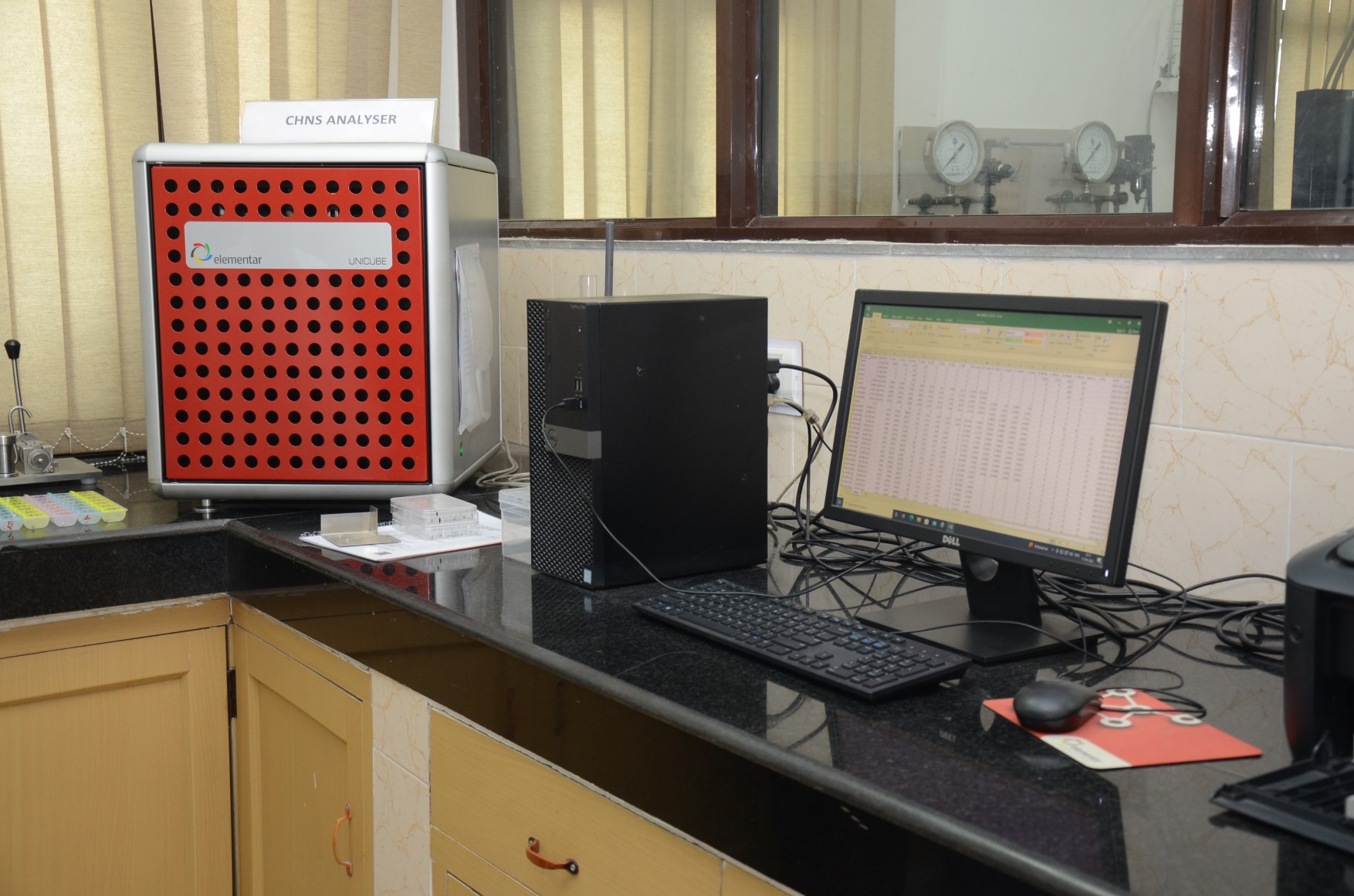
CHNS Analyzer – Elimentar, Germany
The CHNS Analyzer operates on the Dumas combustion principle to determine the content of Carbon, Hydrogen, Nitrogen, and Sulfur (CHNS) in solid, liquid, volatile, and viscous samples. In this method, a sample is combusted at high temperatures (≥1100 °C) in the presence of pure oxygen. The resulting gases pass through a mixing volume and series of high-precision Thermal Conductivity Detectors (TCDs). Water and carbon dioxide are sequentially trapped and measured to quantify hydrogen and carbon, respectively, while nitrogen is detected using a helium reference. The analyzer delivers accurate weight percentage values of each element, enabling precise analysis of soil organic matter. Widely used in hydrological and environmental studies, the CHNS Analyzer is essential for understanding soil fertility, organic content, and biogeochemical cycling.
Master Sizer S3500
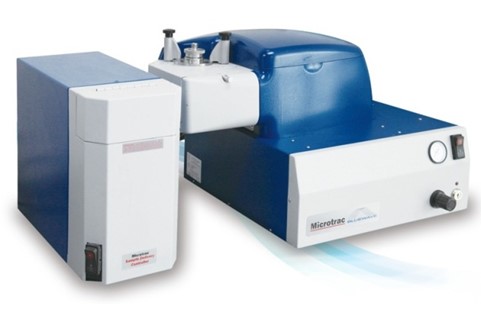
Master Sizer S3500 – Microtrac, USA
The Master Sizer S3500 utilizes advanced laser diffraction technology for high-resolution analysis of fine particle size distribution in both wet and dry soil samples. It provides rapid, repeatable measurements across a broad range of particle sizes with minimal sample preparation. The instrument is ideal for soil texture studies, enabling researchers to analyze subtle differences in particle size distribution that affect water retention, infiltration, and plant growth. Widely used in hydrological and agricultural research, this tool enhances precision in soil characterization.
Pressure Plate Apparatus
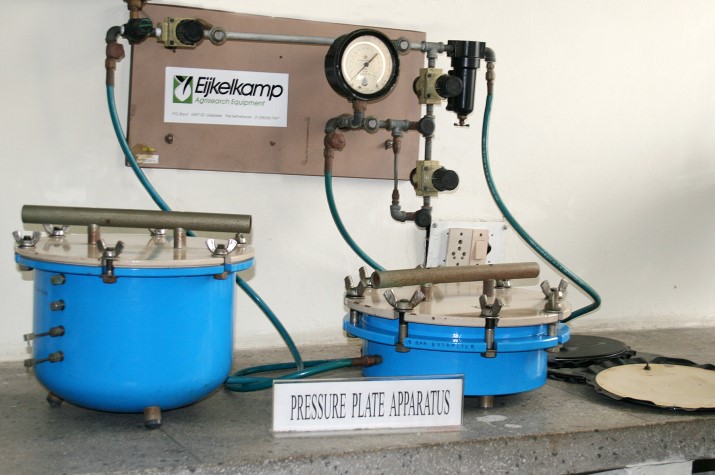
Pressure Plate Apparatus – Soil Moisture Equipment Corp., USA
The Pressure Plate Apparatus is a specialized instrument used to determine the soil moisture characteristic curve, which defines the relationship between soil water content and soil water potential. This curve is vital for estimating key hydrological properties such as field capacity, wilting point, and available moisture content. The apparatus applies controlled air pressure to soil samples placed on ceramic plates, simulating natural tension conditions. By accurately measuring how much water the soil retains at various pressure levels, this instrument provides critical data for understanding soil water retention behavior. Extensively used in agricultural and hydrological research, it supports precise modeling of soil-water movement and irrigation planning.
ICP-OES 5110
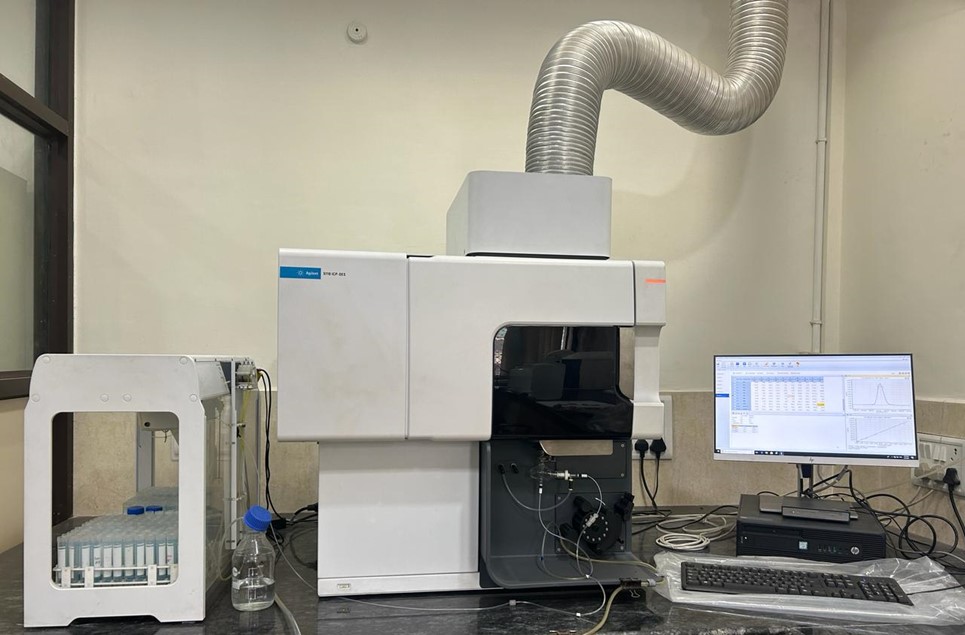
ICP-OES 5110 – Agilent, USA
The ICP-OES 5110 (Inductively Coupled Plasma Optical Emission Spectrometer) is a high-performance analytical instrument used for precise quantification of trace metals such as aluminum, arsenic, cadmium, chromium, copper, iron, lead, manganese, nickel, zinc, and others in soil and water samples. The technique is based on the excitation of atoms and ions using argon plasma at temperatures around 10,000 K, causing them to emit light at element-specific wavelengths. These emissions are detected and analyzed using a spectrometer, and concentrations are calculated using Beer-Lambert’s law. The system supports multi-element analysis with high sensitivity and accuracy, aided by CCD detectors and minimized spectral interference through optimized wavelength selection. Widely used in environmental, hydrological, and agricultural research, the ICP-OES 5110 is an essential tool at the Soil Water Laboratory of the National Institute of Hydrology, Roorkee, for assessing contamination and understanding the geochemical behavior of trace elements in natural resources.
ICW Lab Permeameter
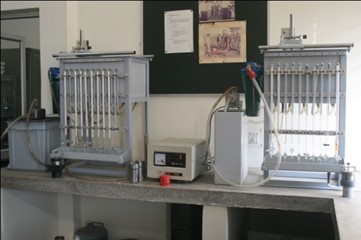
ICW Lab Permeameter – Eijkelkamp Agrisearch Equipment, The Netherlands
The ICW Lab Permeameter is designed to measure the saturated hydraulic conductivity of soil samples under controlled laboratory conditions. It enables accurate determination of the ease with which water moves through soil pores, a key parameter for understanding infiltration, drainage, and groundwater recharge. The system operates by applying a constant head or falling head method to drive water through a soil column, and the resulting flow rate is used to compute hydraulic conductivity. This instrument plays a crucial role in hydrological modeling, irrigation planning, and soil management practices. At the Soil Water Laboratory of the National Institute of Hydrology, Roorkee, the ICW Lab Permeameter is regularly employed in research studies to quantify water movement through soils and assess their suitability for agricultural and environmental applications.
GeoPyc & AccuPyc
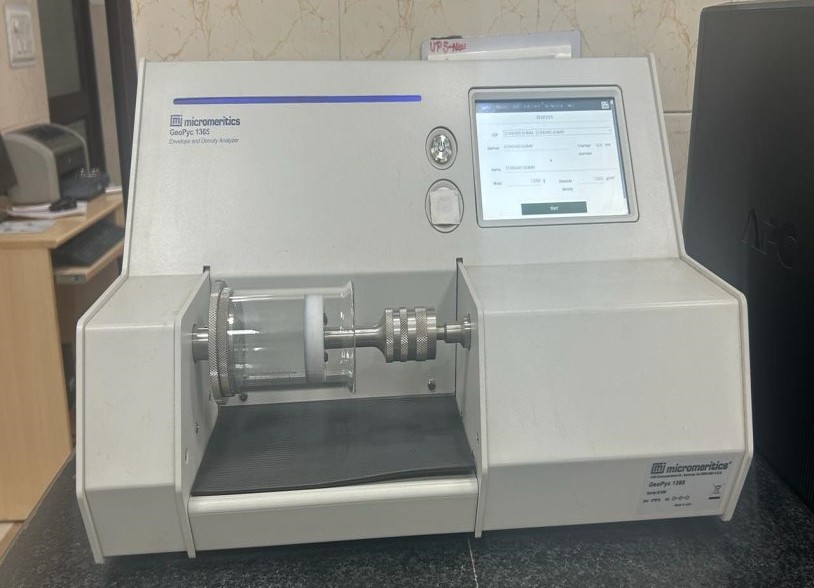
GeoPyc & AccuPyc – Micromeritics Instrument Corp., USA
The GeoPyc and AccuPyc systems are advanced instruments used for measuring the bulk density and particle density of soil samples with high accuracy and repeatability. The GeoPyc operates using a dry displacement method, which determines bulk density by enclosing the sample in a precision chamber and measuring the volume displaced by a dry medium. The AccuPyc employs gas pycnometry, typically with helium, to determine particle density by calculating the volume of the sample based on pressure changes. These measurements are vital for understanding soil porosity, compaction, and structure—parameters that significantly influence water movement, root growth, and aeration. At the Soil Water Laboratory, National Institute of Hydrology, Roorkee, these instruments are routinely used in hydrological and agricultural research to support detailed soil physical characterization.
Digital Resistivity Meter
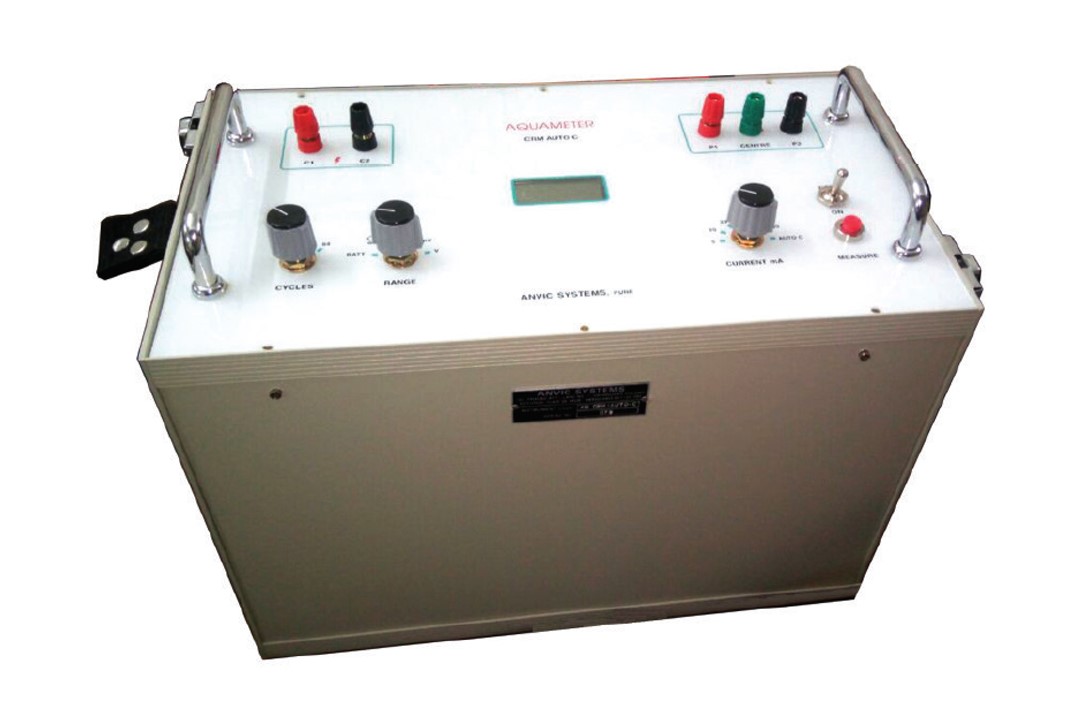
Digital Resistivity Meter – Envic Systems, India
The Digital Resistivity Meter is a geophysical instrument used to measure the electrical resistivity of subsurface materials, which helps in understanding soil and groundwater properties. It operates by injecting a known current into the ground through electrodes and measuring the resulting potential difference. The calculated resistivity values reveal variations in soil composition, moisture content, salinity, and the presence of groundwater or impermeable layers. This instrument is critical for aquifer characterization, salinity mapping, and subsurface profiling. At the Soil Water Laboratory of the National Institute of Hydrology, Roorkee, the Digital Resistivity Meter is extensively used in field-based geophysical investigations to support groundwater exploration, modeling, and environmental assessments.