Altogether a total of 311 villages and 1037 households were surveyed during the field visits throughout
the 5 districts in the UGB. The spatial distribution of the villages is shown in figure.
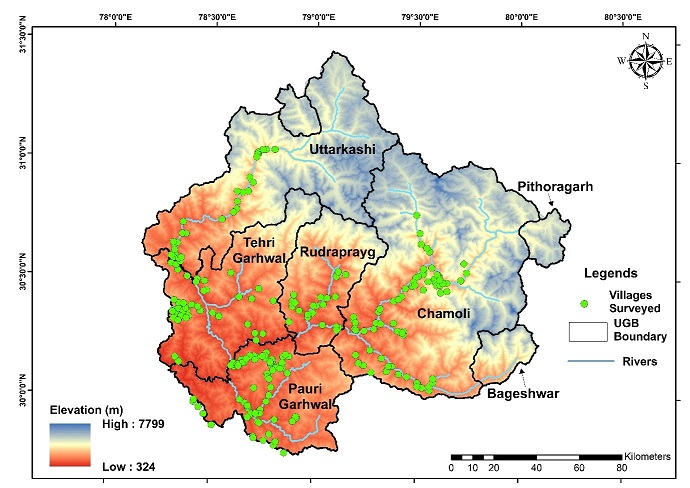
Villages Surveyed During Field Visit in the Upper Ganga Basin
It was noted that most of these villages had proper road transportation and connectivity
(almost 83% bituminous roads), but lacked basic facilities like education, hospitals, etc. Also
these villages are highly prone to landslides as this region is geologically unstable and ecologically
sensitive. Due to anthropological factors, the frequency and intensity of natural disasters have
increased in the fragile state over the last few decades.
Another major issue is the inadequacy of water availability due to lesser rainfall, lack of proper
water harvesting/storage structures and lack of maintenance of existing structures.
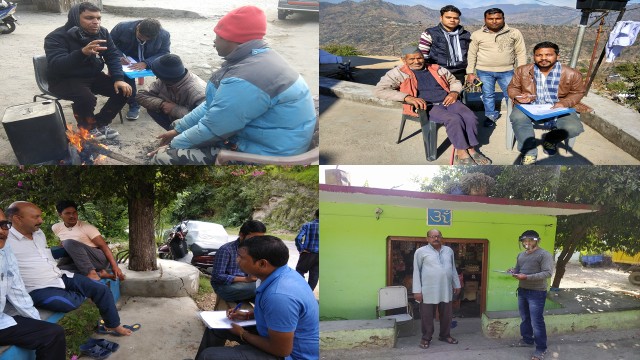
Collection of Information through Questionnaire
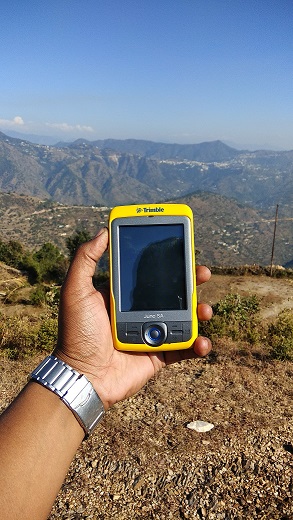
Recording Lat/Long of Important Locations with Hand Held GPS
The major sources of water for the 311 villages surveyed so far are from natural
springs and gadheras (small streams of 1st and 2nd order). Public
taps and hand - pumps have also been found in many villages to meet the water demand.
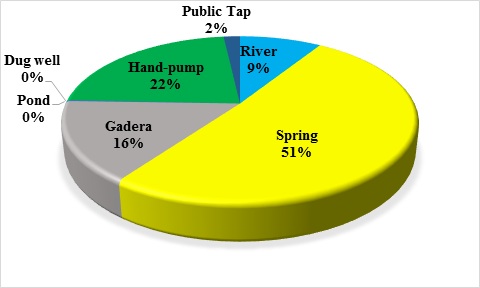
Source - Wise Distribution of Water Sources
The study explored to find the water adequacy in the upper Ganga basin in the entire year. It was found that water shortage was experienced particularly in the months of May and June (Pre - monsoon) for the villages which fall at a lower elevation zone due to the drying up of natural springs. However, at higher elevation the villagers face water shortage in the months of December and January due to freezing of pipes.
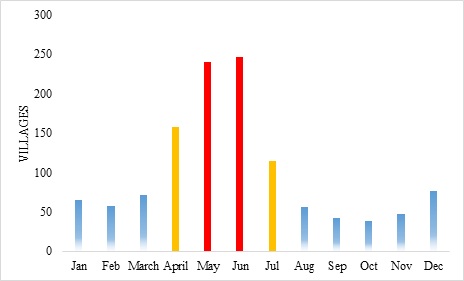
Month - Wise Number of Villages Facing Water Scarcity
During the survey the team tried to assess the environmental degradation such as deforestation,
soil erosion, change in LULC, etc. while visiting the villages. During the discussion, the
villagers
were asked to respond on the extreme events faced at least once in their respective villages.
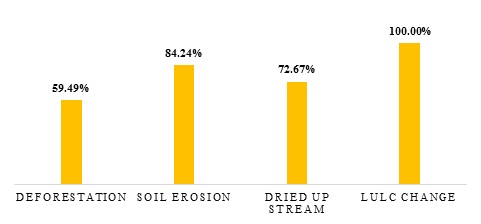
Major Environmental Issues Prevalent in Villages
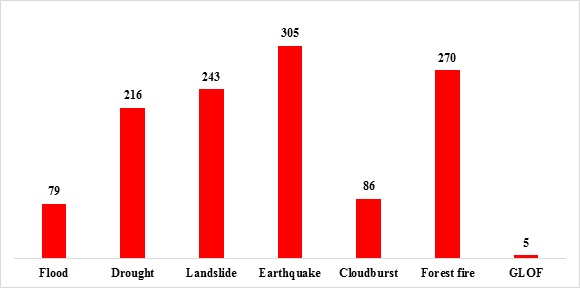
Villages Affected by Disasters
Majority of the villagers depend directly on rainfed agriculture and daily labour for their
livelihood. About 90% of the population depend on agriculture and animal husbandry for their
livelihood, whereas the rest 30-40% depend on small business and labour.
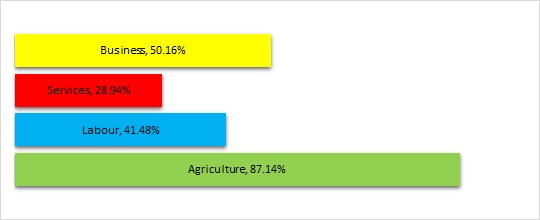
Existing Livelihood Options in Villages
Agricultural productivity is declining due to climate change i.e. lower rainfall / snowfall, which in turn is directly having negative impact on the livelihood of the villagers. Apart from non-availability of basic infrastructure on health and education, low income from agriculture with high risk associated in the sector is one of the major reasons contributing to the migration of people from villages. About 82% of the villages surveyed reported an increasing rate of migration in the region. Agriculture with the provision of assured irrigation facilities will drastically curb the migration as opined by the villagers. Water induced migration cannot be ascertained at this point and needs further investigation.
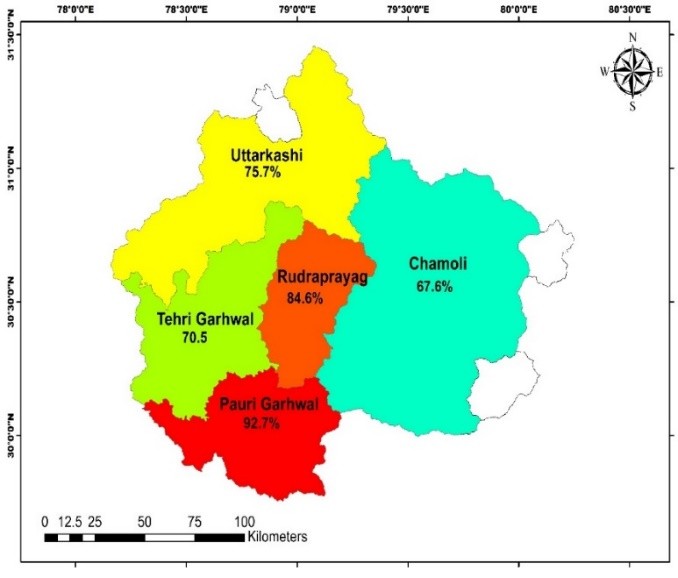
Prevalent of Migration in Villages
- Almost 82% respondents acknowledged that the issue of migration is real, some permanently while others temporarily, due to unavailability of basic necessities such as Employment, Education, Medical Facilities, etc.
- Pauri Garwal district showed a very high rate of migration according to the survey.
- Villagers living at very high altitudes migrate seasonally due to harsh weather conditions and return during the tourist season, i.e. the "Char Dham Yatra".
- The villages that are permanently being vacated are called "Ghost Villages". Recently Uttarakhand has seen a alarming rise of such villages.
Study Area
Inventory of Cloudburst Events (CBEs) and Villages
Formulation of Questionnaire
Cloudburst Distribution and Vulnerability Assessment